EN
EN


Treatment of patients with oncohematological diagnoses is still a challenge even for the best doctors in the world. However, in recent years, significant progress has been made in controlling leukemia, lymphoma, myeloma, anemia and other serious diseases. Improving overall success rate statistically, while reducing the number of side effects, and the therapy itself becomes more sparing to the patient. Let’s look at what modern oncohematology has achieved…
Bone marrow transplantation
It is difficult to name a specific figure, if it is a question about the indicator of the success of bone marrow transplantation. This is due to the fact that there are different types of transplantation: autologous, allogenic, haploidentical, and allogenic unrelated. However, if we summarize, this figure, for example, for the best clinics in Israel & Turkey will be up to 90%. At the same time, the statistics of bone marrow rejection in the leading centers of bone marrow transplantation in the world is practically zero.
Now the main cause of death in bone marrow transplantation is infection. But soon this problem will be solved. Today in the leading Bone marrow Transplant centers a special environment is created in which the patient is almost completely protected from infections. For example, in the Turkish clinic of Anadolu, which is considered one of the leaders in this field, special rooms are made where the patients’ attendees are sterilized before meeting the patient.
However, few sterile rooms and wards, unfortunately, are not enough. In this matter, the qualification of specialists is very important, which can identify patient’s infection on time. All these moments have been taken into account and worked out in the best medical institutions of the world which contributed to a significant breakthrough in the fight against diseases like blood cancers.
Immunotherapy and monoclonal antibodies
This applies to blood cancers: monoclonal antibodies treat all non-Hodgkin’s and Hodgkin’s lymphomas. They are artificially created variants of proteins of the immune system. Monoclonal antibodies produce clone cells derived from a single progenitor cell. They are divided into two groups: monoclonal antibodies that simply tag cancer cells for immunity, and those that deliver the drug to the cancer cells.
The first variant is used most often, for example, Alemtuzumab for the therapy of lymphocytic leukemia, Rituximab for the therapy of B-cell lymphoma and others. The second type of monoclonal antibodies is those that transfer chemotherapy drugs or radioactive particles to cancer cells. For example, Ibritumomab (Zevalin) for the therapy of non-Hodgkin’s lymphoma belong to this group.
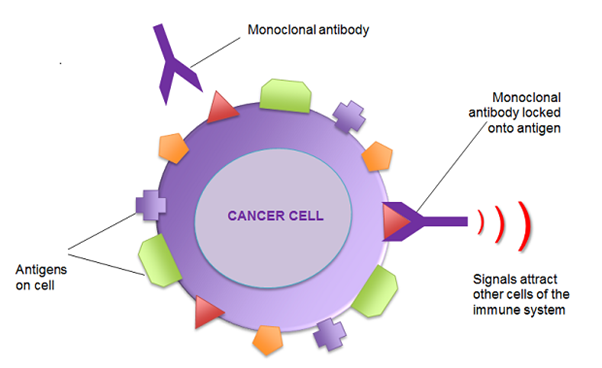
Monoclonal antibodies have become a real breakthrough in oncohematology, firstly, because they do not attack the entire body, unlike chemotherapy. Secondly, they have significantly fewer side effects than other treatments. And finally, these drugs are available even in tablets form which greatly facilitates the treatment process of the patient.
Over the past few years, medicine has made a huge step forward in the treatment of oncohematological diseases. This is confirmed by the best experts of the world from personal experience. However, how quickly the world would move in the issue of the invention of innovative therapy, the truth remains unchanged — the success of treatment still depends on the quality and timeliness of the diagnosis. The most difficult thing is to help a patient who has already been treated for non-existent diseases. It is in your power to prevent this.
Also read: “COST OF BONE MARROW TRANSPLANTATION AND WHERE IS IT PERFORMED”