
 EN
EN


Spinal cord tumors pose a serious danger to the patient if the tumor was not detected at an early stage and at that time the patient did not receive the necessary treatment. The difficulty of identifying them lies in the fact that a person does not feel any manifestations of the disease for a long time. Symptoms arise already at the moment when the pathology reaches a certain size. However, in this case, it is possible to conduct a successful treatment of the tumor. Experts of MedicGlobus will talk about the methods of diagnosis and treatment of spinal cord tumors in this article.
READ IN ARTICLE:
What is a “spinal cord tumor”?
What are the types of spinal cord tumors?
What are the symptoms of spinal cord tumor?
How are spinal cord tumors diagnosed before treatment?
What are the treatments for spinal cord tumors?
HOW SPINAL CORD TUMORS MANIFEST ITSELF?
A spinal cord tumor is a benign or malignant neoplasm that occurs directly in the area of the spinal cord. Such pathologies are much less common than brain tumors – about 5 times. And in relation to the frequency of oncological neoplasm development in the whole organism, a spinal cord tumor occurs in less than 2% of cases. Neoplasms in this area occur in both children and the elderly, but most of all middle age patients suffer from these pathologies.
WHAT ARE THE TYPES OF SPINAL CORD TUMORS?
Intramedullary – tumors that develop inside the body from the cells of the medulla. Most often manifested in the form of astrocytomas, hemangioblastomas and ependymomas.
Extramedullary – are formed above the hard shell of the spinal cord or above it, are formed from the tissues that surround the spinal cord (for example, fatty tissue or nerve roots) and mainly represent a metastatic process. Extramedullary tumors are found in 80% of cases and are more often manifested in such diagnoses as neuroma and meningioma.
SYMPTOMS OF SPINAL CORD TUMORS

Neoplasms of any nature cause disturbance in the cerebrospinal fluid and blood circulation. One of the most important symptoms of a neoplasm in the spine is sharp pain. It can be localized in different places, depending on where the pathology develops.
With a tumor in the cervical region, the person experiences pain when turning the head, which will transfer to the back of the head.
If the formation is in the chest, the intercostal space hurts, in the cases when the lumbar region and tailbone are affected, the pain goes to the legs.
The strength of the painful sensations increases with an increase in the size of the tumor, and then other signs of pathology begin to appear, for example:
- Decreased muscle tone, weakness;
- Numbness or tingling in the hands or feet, as well as in the region of the head, abdomen, and chest;
- Violation of motor functions;
- High pressure, seizures, convulsions, headaches, a sharp decrease in body weight;
- Respiratory failure;
- Malfunctions in the urogenital system and intestines.
HOW DOES CLINICS ABROAD DIAGNOSE SPINAL CORD TUMORS?
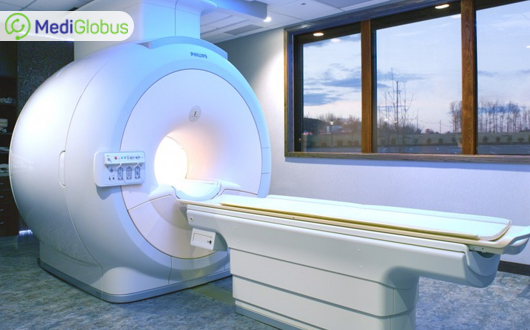
Foreign medical centers use the maximum of modern resources to detect spinal cord pathologies in children and adults, since accurate diagnosis is the key to effective therapy.
In foreign clinics, the equipment of the latest versions is installed, which either does not have a negative impact on the body, or the level of danger is very low. Most often methods used in the diagnosis of tumors of the spinal cord are:
Myelography is a radiographic contrast study that is used to identify a block of subarachnoid space. As a result of myelography, doctors receive images in various projections, in which changes in the tissues of the spinal cord are clearly visible.
Computed tomography – helps to explore the affected area of the spinal cord from different angles and from several angles, which is possible due to the three-dimensional model of the body, which is formed as a result of diagnosis. CT scan is highly accurate, since modern research equipment makes it possible to set the slice thickness to 1 mm.
Magnetic resonance imaging – a diagnostic method that involves the use of electromagnetic waves – with their help, a three-dimensional image of an organ is formed in high resolution. This allows the object to be as close as possible and to clarify the location of the spinal cord tumor.
Radionuclide examination – radiation examination option, which makes it possible to assess the structure and functional state of spinal cord with gamma cameras and special detectors.
TREATMENT METHODS OF SPINAL CORD TUMORS ABROAD
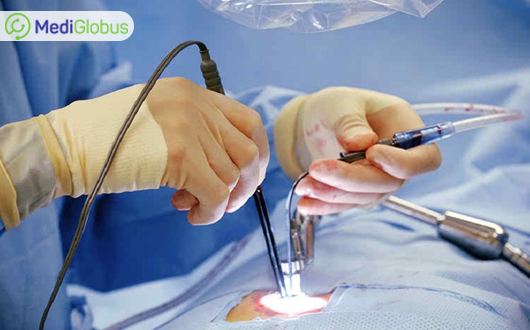
In selecting the optimal treatment plan, the doctors of foreign clinics take into account all the individual characteristics of the patient.
The nature of the neoplasm, its size and location, as well as the general state of health and the age of the patient are taken into account.
A multidisciplinary team of doctors is working on the therapy program, each of whom makes his own adjustments — such a personalized approach increases the chances of successful treatment.
There are several options for the treatment of spinal cord tumors – often they are used in combination. These include the following:
- Surgical removal of a spinal cord tumor is a procedure to excise a tumor, partially or completely, if possible. Surgery is the standard treatment for spinal cord tumors. Thanks to the use of modern micro tools and neuroimaging systems – the risk of complications is minimal during and after the intervention. Doctors strive to maintain areas of high functional significance during the operation, which allows the patient to recover to normal life soon after the procedure.
- Cyber-knife radiosurgery – it is used for certain tumor sizes (when it does not exceed the certain size for carrying out radiosurgery). Removal of a spinal cord tumor occurs without anesthesia in 1-3 sessions. At the same time, the tissues surrounding the neoplasm remain intact and are not subject to negative influence. The recovery period is short and the patient does not need a hospitalization.
- Radiation therapy – involves the use of linear accelerators with the function of intensively modulated therapy. These devices enable the specialists to treat spinal cord tumors with high accuracy in calculating radiation dose and clearly direct the beam on the affected area. IMRT is also used to treat tumors in children.
- Chemotherapy – this method of treating a spinal cord tumor is used for the malignant nature of the neoplasm and is a complementary element to the main therapy. Patient is assigned individually selected drugs, the action of which is aimed at stopping the growth of the tumor and the destruction of pathological cells. Since chemotherapy is prescribed in sessions, it provides an opportunity to recover healthy tissues that have been damaged by medication.
For more information on the treatment of spinal cord tumors abroad, contact MedicGlobus specialists. Consultations of our experts for patients are free!



This is my field of interest and I can say that one of the complicated section for doctors. Operations such as these are done by a whole team of specialists where everyone's opinion matters. More than technology the skill of a surgeon is important.