EN
EN


Chemotherapy is one of the main methods of cancer treatment. Over the years it has proven itself to be a reliable and effective way of fighting malignant tumors. Modern medications cause fewer side effects. From this article, you can learn about the progress of chemotherapy and what should a patient expect.
WHAT IS CHEMOTHERAPY?
Chemotherapy is a group of drugs that fight cancer. They damage the DNA of malignant cells and prevent them from dividing and growing anymore. This is why there are two types of chemotherapy:
 cytostatic, inhibiting the growth of tumor cells;
cytotoxic, destroying tumor cells.
Although chemotherapy is best known as a cancer treatment, it is also used against blood or autoimmune diseases.

Chemotherapy is almost never used alone. Most often it is combined with other methods: surgical removal of the tumor, radiotherapy, immune therapy, targeting therapy, etc. The doctor chooses the treatment method based on a thorough analysis of each case.
The doctor can prescribe chemotherapy for a variety of purposes:
destroying malignant cells;
reducing the tumor before surgery;
destroying residual cancer cells after other treatments;
stopping recurrent cancer;
stopping the spread of metastases;
controlling the size of the tumor.
Also, chemotherapy is used as palliative care for terminal cancer. In this case, its main task is to relieve the symptoms of the disease and improve the quality of life of a cancer patient.
The quality of chemotherapy has improved over the past 20 years. The drugs have become much more effective, and patients are now able to tolerate therapy more easily. Today’s medicines target cancer cells and affect than healthy ones less.
WHAT ARE CHEMOTHERAPY PROTOCOLS
Chemotherapy for oncology can start after establishing the diagnosis and deciding upon the treatment plan. Doctors almost never use just one medication. Instead, a group of drugs is prescribed, taken together or in a sequence.
This way is much more effective because they increase each other’s effectiveness. For example, if drug A destroys a tumor by 35%, and drug B – by 27%, their total effect is not 62%, but 75%.
| Chemotherapy |
|---|
| Consultation with an oncologist |
| Personalised drug selection |
| Fewer side effects |
| International protocols |
For this purpose, doctors use “chemotherapy protocols”. They exist for each type of cancer and recommend drug combinations, dosage, and order of usage. These protocols are based on studies on the effectiveness of certain drigs against particular types of cancer.
Factors that affect drug selection:
Type of cancer;
Stage of the disease;
Tumor location;
Previous chemotherapy courses;
Patient’s age;
State of health and individual characteristics.
Older people are more vulnerable to the side effects of chemotherapy, so they get a gentler combination of drugs.
Some cancers resist treatment. Today there are drugs that increase the vulnerability of malignant cells to chemotherapy.

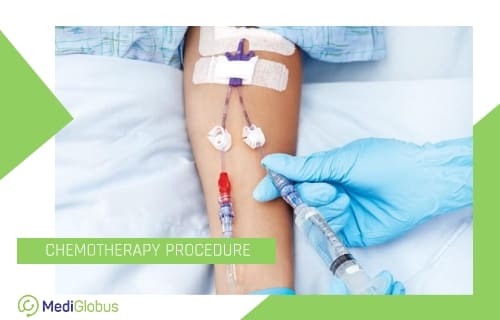
CHEMOTHERAPY PROCEDURE
The duration of the chemotherapy course depends on many factors:
Type and stage of cancer;
Purpose of chemotherapy;
Types of drugs;
Response to treatment.
Treatment is usually prescribed in cycles, where periods of medication alternate with periods of rest. The latter lets the body rest and restore healthy cells. The duration of these cycles is determined by the doctor.
Chemotherapy for cancer is painless.
There are different ways of administering medication: intravenous, oral (pills), or injections. The type of administration depends on both the type of drugs and the patient’s reaction to them.
Modern chemotherapy does not disrupt the patient’s usual life schedule. Inpatient treatment is not necessary. For intravenous treatment, each course takes about an hour. Many patients can take their meds home, especially those who take pills.
MYTHS ABOUT CHEMOTHERAPY
Most of the chemotherapy myths are based on outdated information. Complications that were previously caused by this group of drugs now either do not happen or are resolved with additional treatment.
“Chemotherapy lowers immunity”
This used to be an issue. Drugs used in chemotherapy influenced the cells that quickly divide, particularly, blood cells. Modern drugs do not have this side effect. Taking chemotherapy courses does not increase the risk of contracting an infectious disease.
“Chemotherapy causes weight loss”
On the contrary, patients often gain weight. For example, in the treatment of breast cancer, you can gain up to 4-5 kg. This is normal and an indicator that the chemo is working the way it should.
“Chemotherapy is only used for terminal cancer”
Chemotherapy is not a sentence. It treats different types of cancer in different stages.
“Chemotherapy is outdated”
Just because there are new methods of fighting cancer like immunotherapy or FLASH-therapy, it does not mean that the old techniques aren’t relevant. In most cases, combinations of different treatments are used, as this strategy is most effective.
WHAT ARE THE SIDE EFFECTS AND WHAT CAN BE DONE ABOUT IT?
Modern chemotherapy has fewer side effects than before. They depend on the type of drugs and individual reaction. Long-term side effects are almost non-existent.
Nausea and vomiting
In modern hospitals, chemotherapy is always accompanied by a course of nausea-suppressing drugs.
For every 150 patients, only one or two suffer from nausea at the beginning of the treatment.
Infertility
Many women lose their period during chemotherapy. This is normal, and once you stop taking the medication, it comes back. At the same time, a small percentage is at risk of fertility problems. This is especially true for women over 35 years of age. Those concerned can freeze their eggs before starting the procedure. Similarly, men have the option of freezing their sperm.
Hair loss
Since modern medications have a smaller effect on healthy cells, hair loss is not as common. Also, not all medications cause this side effect. Still, you should expect hair thinning. To avoid this, doctors use scalp cooling. During this procedure, they cover the skin areas that should be protected with cooling pads. This reduces the blood flow that carries the drug. The method is FDA approved.
Besides, afterward, the hair becomes thicker and more voluminous than before.
Other side effects include weakness, anemia, mouth sores, memory problems, taste, and smell changes.
IN WHICH CLINICS IS CHEMOTHERAPY PERFORMED?
Cancer treatment abroad has many advantages: modern drugs are available, side effects have remedies, patients get access to 24-hour care by the professional medical staff.
In Europe, groundbreaking chemotherapy is available in Germany and Spain. Among German clinics, the Helios and Asklepios networks are worth mentioning. Teknon and Quironsalud are popular in Spain. These medical networks have strong oncology departments. Doctors working there undergo training and internships in the most prestigious institutions of the world.
More affordable treatment is available in Turkey, Israel, and South Korea. Large medical networks follow international treatment protocols and have state-of-the-art equipment. Turkish hospitals worth mentioning are Liv, Koç, Memorial and Medical Park. Israel has strong oncology departments in Ichilov and Assuta clinics. The most popular oncology centers in Korea belong to Samsung, Soon Chun Hyang and Anam medical networks.

If you are interested in chemotherapy treatment abroad, please leave your request on the Mediglobus website. Our medical coordinators will answer all your questions and help with the selection of the clinic and the organization of the trip.