EN
EN


In February 2020, the IMV pharmaceutical company announced that it had successfully completed the second phase of its new cancer drug trials. The drug’s name is DPX-Survivac. The company plans to use it for the treatment of resistant or relapsing tumors. The medication worked for 75% of the subjects.
A relapse is a type of cancer that occurs after the patient has been fully cured. It can appear in the same organ or in a new place, but it still is a relapse if it is the same type of cancer as before. When the new tumor belongs to another cancer group, it’s considered secondary cancer.
In order to prevent the disease from recurring, in the first few years after treatment, the patient should undergo regular examinations by an oncologist.
The prognosis depends on the speed and prevalence of the tumor. As a rule, recurrent cancer is more difficult to treat than primary cancer.
HOW DOES DPX-SURVIVAC WORK?
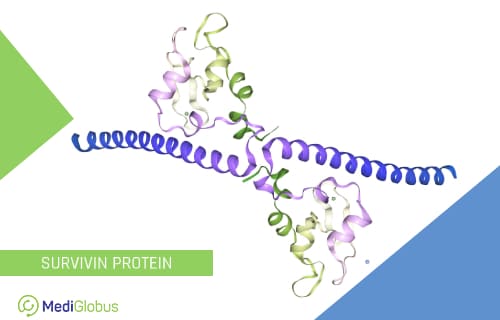
DPX-Survivac contains a protein called survivin. Usually, its presence in the human body is very low, however, high levels of survivin are found in tumors. The protein, once in the blood, connects to the human immune T-cells. This action trains the cells to detect and destroy survivin in any part of the body. As a result, a person’s own immune system begins to inhibit tumor growth.
The level of survivin is high in tumors of the ovaries, breasts, melanoma and myelodysplastic syndrome (a disease that often causes leukemia). Its content in the body is slightly lower in lung cancer and diffuse B-cell lymphoma. To a lesser degree, it is present in lung tumors and diffuse large B-cell lymphoma.
DPX-Survivac is a type of drug used in immunotherapy. In 2018, James Allison and Tasuku Honjo won the Nobel Prize in medicine for pioneering this type of treatment. The advantage of this T-cell immunotherapy is that it is less toxic to the body and prolongs the life of the patient for a longer time.

WHAT DO THE TRIALS SHOW?

In order to test the effectiveness of the drug, it was given to 19 patients with a relapse of ovarian cancer. Almost all of them had already undergone several forms of treatment before, among which were platinum chemotherapy and PARP inhibitors.
In 75% of the subjects, the tumor stopped growing. In 53% of the subjects, it decreased in size. For this type of cancer, these are very good results.
Recurrent ovarian cancer is hard to treat. Surgery and chemotherapy are not very efficient in this case.
In one-third of the group, the effect maintained for six months. In three women, the tumors stopped growing for 9 months after the trial ended.
The treatment was also well-tolerated. Among the side effects, there were only flu-like symptoms.
DPX-SURVIVAC PROSPECTS
The research is now moving to the next stage. Doctors are going to see how effective DPX-Survivac will be in combination with other drugs. They are already investigating the combination of DPX-Survivac and Keitrude (another type of immunotherapy).
In addition, studies will be conducted on other types of cancer.
IMV hopes that this drug will soon be approved by the FDA for introduction into the standard treatment protocols. News of the next phase is expected in the first half of 2020.
| Immunotherapy |
|---|
| Histological comparability test |
| Novel drugs |
| Consultation with an oncologist |
| Recommendations for relapse prevention |
After that, the drug will have to go through two more stages of research, during which it will be tested on large samples.
In the end, IMV expects to use DPX-Survivac against resistant cancer in combination with other immunotherapies and low-dose chemotherapy.
WILL IT BE POSSIBLE TO UNDERGO IMMUNOTHERAPY WITH DPX-SURVIVAC?
As long as DPX-Survivac is in the testing phase, it remains inaccessible to the majority of the patients. Once the drug is approved by the FDA, it is expected that top hospitals in the USA, Israel, Turkey, and South Korea will be the first to adopt it.
Among them, treatment in the USA is the most expensive. Compared to it, oncology centers in Turkey are 40% cheaper, and in Korea – up to 60%.
Foremost, pay attention to the hospitals that cooperate with American medical networks. They are the quickest to adopt treatment standards, and their staff often undergo training in American clinics.

 American Hospital in Istanbul (Turkey);
Chaim Sheba Medical Center (Israel);
Teknon Clinic (Spain);
KCM Clinic (Poland).
If you are looking for a clinic that treats recurrent cancer effectively and reliably, leave a request on MedicGlobus website. Our coordinators will help you find the best option among experienced oncologists and help with the organization of your travel.