EN
EN


In 2018, over 9.6 million people died of cancer. Doctors today agree that the best way to prevent death is to detect and begin treating the disease in the first stages. However, many fatal cancers are asymptomatic at first. Because of that, patients get diagnosed already in the 3-4 stages. The American company GRAIL is working to solve this problem. They create a test that can detect more than 50 common cancers from a blood sample. You can find out how this method works and how successful it is by reading this article.
How can detect cancer from a blood sample?
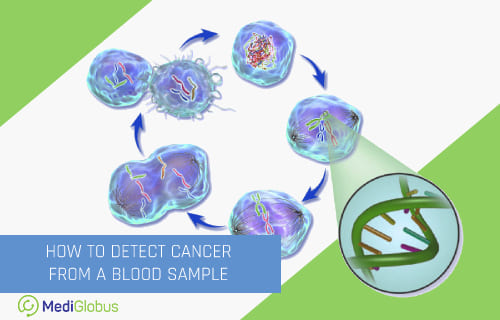
Cancer is a neoplasm that develops from the body’s cells. Because of genetic mutations, it does not behave in the same way as other tissues and disrupts the entire system. Scientists at the Dana Farber Institute of Oncology are developing a new method to detect cancer cells through their genetic differences.
Blood contains small fragments of genetic material from different cells, including cancerous ones. These fragments are called extracellular DNA. Previously, the problem was with differentiating cancer DNA from the other types. The new method aims to study traces of a specific genetic process called methylation. If methylation looks atypical, it is often an indicator of cancer activity.
There are about 30 million methylation locations in the human genome. The new test analyzes 1/30 of them in search of atypical patterns. Since a very large amount of information needs to be processed, artificial intelligence (AI) is used for this purpose.
How do scientists detect cancer with artificial intelligence?
Artificial Intelligence is a program capable of modelling the way the human brain processes information. Most of the network sites we use today are partially controlled by computer algorithms – for example, Google, Facebook and Youtube. The AI can process vast amounts of data quickly, something no human being can do.
In medicine, artificial intelligence can be more effective than expert doctors. For example, at early diagnosis of breast or laryngeal cancer.
Artificial intelligence can notice patterns in a large stream of data. The more information AI is shown and the better it is selected, the better the results. This means that the more people test with this program, the more accurate it will be.
Testing works as follows:
 Doctors take approximately 80 ml of blood from the patient.
The blood is processed in the lab. Extracellular DNA is extracted from it.
The information obtained is analyzed with an AI. The algorithm reads the extracellular DNA and compares it with its database.
With this test, researchers can determine:
If the person has cancer;
From which tissue does it come.
If this test starts to be used during regular check-ups, doctors will be able to find cancer at earlier stages.
How was the research done?
Scientists have created an AI that can detect and analyze methylation data from extracellular DNA. For this purpose, it was “trained” using the world’s largest cancer database. It’s owned by the California company GRAIL.
To test the algorithm, scientists have collected blood samples from 4,316 people. 2,185 of them were diagnosed with cancer, but have not yet begun treatment. 2,131 were healthy. Comparing the results of these two samples, the algorithm trained itself to find the cancer signs.
Comparing the AI method with existing blood tests for oncological markers, researchers claim the new test is more effective. It detects the presence and origin of cancer more accurately than genetic sequencing.
 Read:
Read: 
What types of cancer can be detected with the new blood test?
The method, developed by scientists at the Dana Farber Cancer Institute, allows diagnosing about 50% of known cancers. Among them – the most common and fatal oncologies, which doctors often find only at the 4th stage. For example, this is:
anal cancer;
bladder cancer;
colon cancer;
oesophagal cancer;
stomach cancer;
head and neck cancer;
liver and bile duct cancer;
lung cancer;
ovarian cancer;
pancreatic cancer;
lymphoma;
multiple myeloma.
The efficiency of a cancer diagnosis with a new blood test
The algorithm gave false-positive result only in 0.7% of cases. For comparison, annual mammograms falsely diagnose about 10% of women with breast cancer.
In 96% of cases where the algorithm detected cancer, it was also able to identify from which tissue the tumour grew. In 93% of these cases, the data was correct.
The effectiveness of the method depends on the type of cancer. For example, stage 1 pancreatic cancer was detected in 63% of patients. On average, the test correctly detected the presence of 50 cancers in 67.3% of cases. The accuracy of the test:
at the first one – 18%;
at the second stage – 43%;
at the third stage – 81%;
at the fourth stage – 93%.
The researchers also measured the effectiveness of detecting cancers with high mortality rate. In the US, where the study was conducted, they were responsible for 63% of annual cancer deaths. The accuracy of the test was:
at the first one – 39%;
at the second stage – 69%;
at the third stage – 83%;
at the fourth stage – 92%.
The scientific community is optimistic about this discovery. After all, 39% are those people who wouldn’t be able to learn about the disease otherwise. On a global scale, it could save millions of lives.
Also, this study aims to create a quick and affordable way to test for many types of cancer at once. In real life, doctors do not limit themselves to just one test. The oncology check-up includes various types of examinations, a thorough analysis of the patient’s condition, complaints, and family history.
If the new cancer test method gets approved, it will allow testing large masses of people quickly and cheaply. First and foremost, it will benefit vulnerable groups who cannot afford more thorough testing.
What do the researchers plan to do next?
For a method to be approved for widespread use, it must go through many stages of verification. The researchers must confirm that it will show results just as reliably on large groups of people. The institute is now going to conduct three more studies in the US and UK. In America alone, more than 15,000 people will participate.
Representatives of the institute hope that over time the test will more accurately detect cancer in its early stages. Also, it is necessary to test how this method will work under the conditions of a normal cancer check-up.
Which hospitals can provide cancer screening?
So far, the method is in too early stages of research to predict when it will appear in clinics. For now, it is possible to perform an oncological examination abroad in any wide profile clinic. Compared to third-world countries, foreign hospitals have more advanced equipment, and doctors have extensive experience and adhere to modern protocols. This enables them to diagnose and treat oncology in a way impossible in less economically developed countries.
Hospitals with the highest success rates of cancer treatment can be listed:
Liv Clinics, Medical Park, Memorial in Turkey;
Schneider, Assuta Clinics in Israel;
Centres Quironsalud, Teknon, Navarra in Spain;
Anam, Soon Chun Hyang, Hasan Hospitals in South Korea.
If you or your loved ones are interested in precise and reliable cancer diagnosis, please leave your request on Mediglobus website. Our coordinating physicians will be able to answer all your questions and advise reputable physicians.