EN
EN


To get to the clinic abroad, most patients use air transport. In this article, we will discuss all the nuances associated with the flights and answer the frequently asked questions.
READ IN ARTICLE:
With which diseases patient can not fly?
What if it is difficult to sit during the flight?
When should I take air ambulance (medical evacuation)?
WITH WHICH DISEASES PATIENT CAN NOT FLY?
A flight can be a stressful situation, even for a completely healthy person. For people who have health issues, it is dangerous to change pressure during takeoff and landing. To a greater extent, this applies to patients who have the following diagnoses:
- Traumatic injuries of the middle and inner ear;
- Large bullae in the lungs;
- Pneumothorax;
- Very high intracranial pressure;
- Severe thrombosis or thrombophlebitis.
The option of a flight using civil aviation aircraft in such cases can only be determined by the doctor. To do this, he needs to study in detail the patient’s condition and the results of the examinations.
Flights for these patients are also not recommended:
- Recently suffered a heart attack or stroke;
- With unprocessed bronchial asthma or asthma in the acute stage;
- With psychiatric diseases;
- Having inflammatory diseases of the nasopharynx and middle ear;
- Pregnant women after 30 weeks of pregnancy, as well as newborns under 1 month.
WHAT IF SITTING POSITION IS DIFFICULT TO ADOPT?
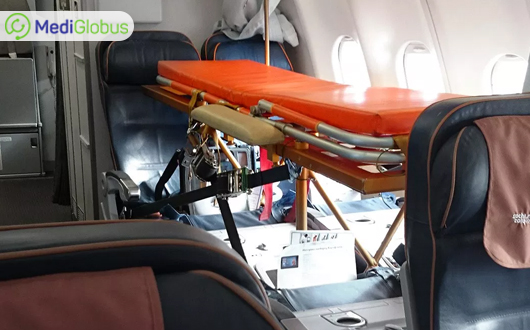
So, what do you do if flying is really necessary? First you need to choose a place for the patient.
In some major airlines (Lufthansa, Turkish Airlines and other), several “medical places” can be provided.
If these do not exist, then patient should buy a ticket in the business class for greater comfort during the flight.
In the case where the patient’s health status allows movement under standard conditions, then “economy” class is also fine.
For those patients who find it difficult to be in sitting position all the time, it will be necessary to take several places – this is important so that during the flight the person can be placed horizontally, removing the armrests between the seats.
Please note that in accordance with the standards of care for patients with special needs, a wheelchair is provided at the airport for easy transportation. In addition, airport staff can assist with boarding an aircraft. Patients who need constant oxygen support will be allowed to bring a portable oxygen concentrator to the cabin of the aircraft (the list of permitted IATA models can be viewed on the airlines’ websites).
When should I take air ambulance?
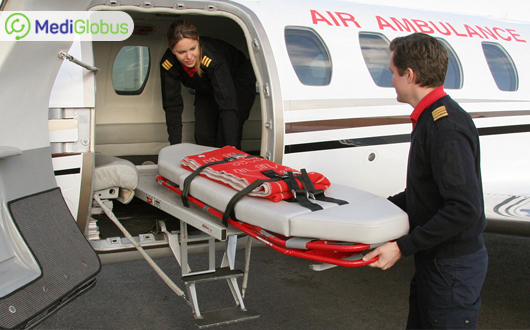
Despite the fact that the crew of air courts of the world’s largest airlines is trained in the basics of providing emergency medical assistance and is ready to help in case of an unforeseen situation, flight attendants are not doctors.
If it is necessary to transport a less critical patient by civilian aircraft, the doctor may be required to accompany him.
In severe cases and in cases requiring emergency medical assistance, the only option is air ambulance (medical evacuation by air).
Modern medical aircraft are equipped with everything necessary to safely and urgently transport the patient to the hospital, and if necessary, to provide qualified assistance or even to start surgery directly on board of the aircraft. In such cases, the patient is accompanied by several related specialists who closely monitor the patient’s condition.
Air ambulance may be required for patients:
- In coma or unconscious state;
- Connected to life support devices (for example, ventilation);
- Urgent patients in case of any complicated emergency situation;
- Critically ill patients, the condition of which requires constant medical control;
- Requiring emergency medical care abroad.
IS IT POSSIBLE TO GET FREE TICKETS?
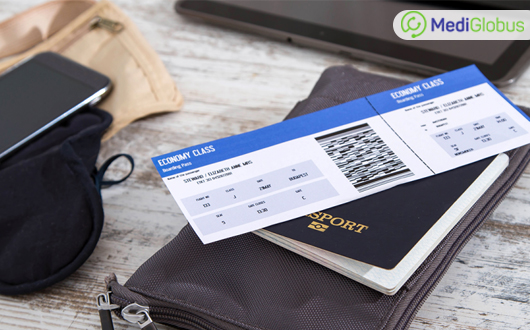
Many airlines from countries with a large flow of patients from abroad together with clinics provide preferential terms.
Thus, using the partner airlines of the medical center, you can get up to 50% discount on the flight, provided that the medical documents from the hospital are available.
In some cases, patients of certain developing countries can receive tickets absolutely free of charge (on a charitable basis).
Such options are usually available to patients who are being financed by the Health ministry or Charitable organization.